Getting Wine and Oil Stains Out of Granite

Nothing about a wine stain on granite is permanent, which surprises most people who find a purple ring at breakfast. Homes near the Temecula Valley wine country see more spilled red than most, and the stains covered by temecula granite countertops wharc online are the same ones that turn up in a Temecula, CA kitchen after a dinner party. Granite is porous at a microscopic level, and a stain is simply liquid sitting in those pores, which means it can be pulled back out.
Why it soaks in
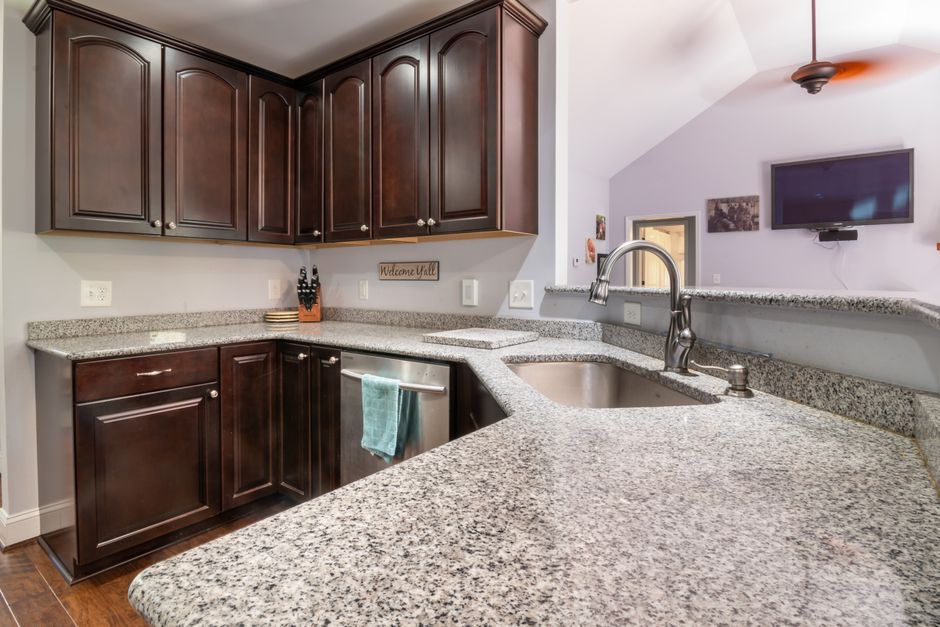
Granite is a crystalline stone, but between the crystals are tiny gaps. Sealer fills most of them and buys time, not immunity. Red wine carries pigment and acid, and the acid can leave a faint etch on a polished surface while the pigment tints the stone below. Cooking oil behaves differently. It does not dry, it spreads outward, and a patch of oil darkens the stone like a damp spot that will not go away. Light stone shows both far more than a dark slab.
Identify what is in the stone

The poultice depends on the stain. Oil needs a solvent poultice, usually baking soda or a powdered absorbent mixed with acetone or mineral spirits. Wine and coffee want a gentler mixture of baking soda with a little hydrogen peroxide, for light stone only. Rust is a third case and should never be handled with those blends. If the origin is unknown, start with the baking soda and water version and see how the stain responds over a day.
Mixing and applying a poultice
Stir the powder into the liquid until it has the texture of peanut butter. Wet the stained area with a drop of water so the poultice pulls evenly, then spread it a quarter inch thick, extending an inch past the stain. Cover it with plastic wrap and tape the edges down with a small hole poked in the middle. The wrap keeps the mix damp long enough to draw the stain upward into it, and the hole lets it dry slowly at the end.
How long to leave it
Most poultices need a full day under wrap and then another day or two open to air. As the paste dries it pulls the stain out with it. Lift it with a plastic scraper, never metal, and wipe the stone with a damp cloth. An old oil stain may need three or four rounds. A fresh spill often clears on the first. Dry air in the Inland Empire speeds the drying phase, so check the paste daily to be sure it has not hardened before the stain is drawn out.
After the stain is gone
Let the stone dry fully for a day, then reseal the area. A stain that returns means the sealer has worn through there. Wipe wine up straight away with a blotting motion, not a rub, and wipe oil with a dry cloth before any cleaner touches it.